Product Description
A laser welding machine is a tool used for welding various materials using laser beams. This process is often used for precision welding, as it allows for a narrow and concentrated heat source to be directed to a specific area. The laser beam melts the material and fuses it together, resulting in a strong and durable weld.There are several types of laser welding machines, including CO2 laser welding machines, fiber laser welding machines, and pulsed laser welding machines. Each type of machine has its unique features and benefits, depending on the materials being welded and the application.
Technical Specifications:
|
Model
|
Laser Welding Machine
|
|
Power
|
200W /300W/ 400W
|
|
Laser Wavelength
|
1064nm
|
|
Pulse energy
|
80J/100J120J
|
|
Laser Type
|
Nd:YAG
|
|
Laser Spot Size
|
0.2-3mm
|
|
Laser Spot Range
|
0.1mm-0.3mm
|
|
Impulse Width
|
0.7-20ms
|
|
Impulse Frequency
|
0-40HZ
|
|
Welding Depth
|
3mm
|
|
Cooling Mode
|
Water Cooling
|
|
Checking System
|
Microscope or CCD
|
|
Protective Gas
|
Argon
|
|
Controlling System
|
PLC Programming
|
|
Output Focal Length
|
80 to 200mm
|
|
Holistic Power
|
5.5KW/6KW/7.5kw
|
|
Dimensions
|
1600x800x1500mm
|
|
Working Area
|
300x300mm/500x500m
|
|
Warranty
|
1 year
|
High-Precision Versatility for Industrial WeldingThis laser welding machine delivers exceptional precision, with an accuracy of 0.01 mm and auto/manual focus adjustment. Its programmable functions and high load capacity make it ideal for intricate and large-scale welding applications. The advanced laser technology supports both mild and stainless steel, ensuring robust welds and minimal distortion, well-suited for demanding industrial environments.
Advanced Servo Positioning and Safety FeaturesFeaturing a servo motor-driven positioning system, this machine offers reliable and repeatable movement for welds along its 3.2-meter jib arm. Integrated safety interlocks and IP54-rated protection ensure operator safety, even in challenging conditions. Its PLC-based control system allows for seamless programming and process control, enhancing productivity while maintaining safety protocols.
Customizable Solutions for Diverse ApplicationsAvailable in both standard and custom configurations, this machine adapts to specific production requirements. With compatibility for wire feeders, adjustable welding speeds, and robust construction, it supports a wide range of applications across manufacturing sectors, from fabrication shops to heavy engineering, all powered efficiently at 3.2 kW in three-phase operations.
FAQs of Crane Jib Laser Welding Machine:
Q: How is the crane jib laser welding machine installed and set up for operation?
A: The machine should be installed on a level surface with access to a three-phase 380V/50Hz power supply and water cooling system. Once positioned, connect the PLC control system, set up the appropriate welding parameters, and calibrate the servo-driven jib arm. Final adjustments include configuring the focus (auto/manual) and ensuring safety interlocks are enabled before operation.
Q: What types of materials can be welded with this machine?
A: This welding machine is compatible with both mild steel and stainless steel, accommodating a welding thickness of up to 25 mm. The fiber or Nd:YAG laser technology ensures adaptability for various industrial metalworking applications.
Q: When should I choose manual vs. automatic focus adjustment?
A: Manual focus adjustment is preferable for specialized or custom welding tasks requiring operator input, while automatic focus is suitable for repetitive production or standard jobs to maximize speed and consistency.
Q: Where can this machine be effectively used?
A: Designed for industrial environments such as manufacturing plants, fabrication shops, and engineering facilities, the machines robust build (IP54 protection) enables reliable operation in diverse settings where precision, flexibility, and heavy-duty welding are needed.
Q: What is the process for routine maintenance of the machine?
A: Routine maintenance involves regular inspection of the laser source, cleaning of welding optics, checking water cooling levels, and ensuring all servo motors and moving parts are lubricated. Its also important to test safety interlocks and calibrate the positioning system periodically.
Q: How does the programmable PLC control benefit my welding process?
A: The PLC-based control system enables precise programming of welding parameters, automated sequences, and repeatable operations, improving process consistency, productivity, and reducing manual intervention.
Q: What are the main benefits of using a crane jib laser welding machine?
A: Key advantages include high precision (0.01 mm), programmable operations, minimal weld distortion, robust safety features, compatibility with wire feeders, automation options, and capability to handle sizable workpieces weighing up to 500 kg.

 Send Email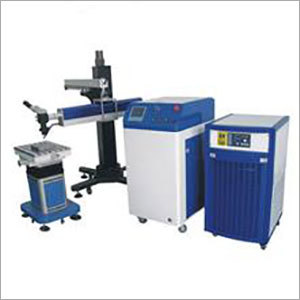





 Send Inquiry
 English
 Spanish
 French
 German
 Italian
 Chinese (Simplified)
 Japanese
 Korean
 Arabic
 Portuguese